
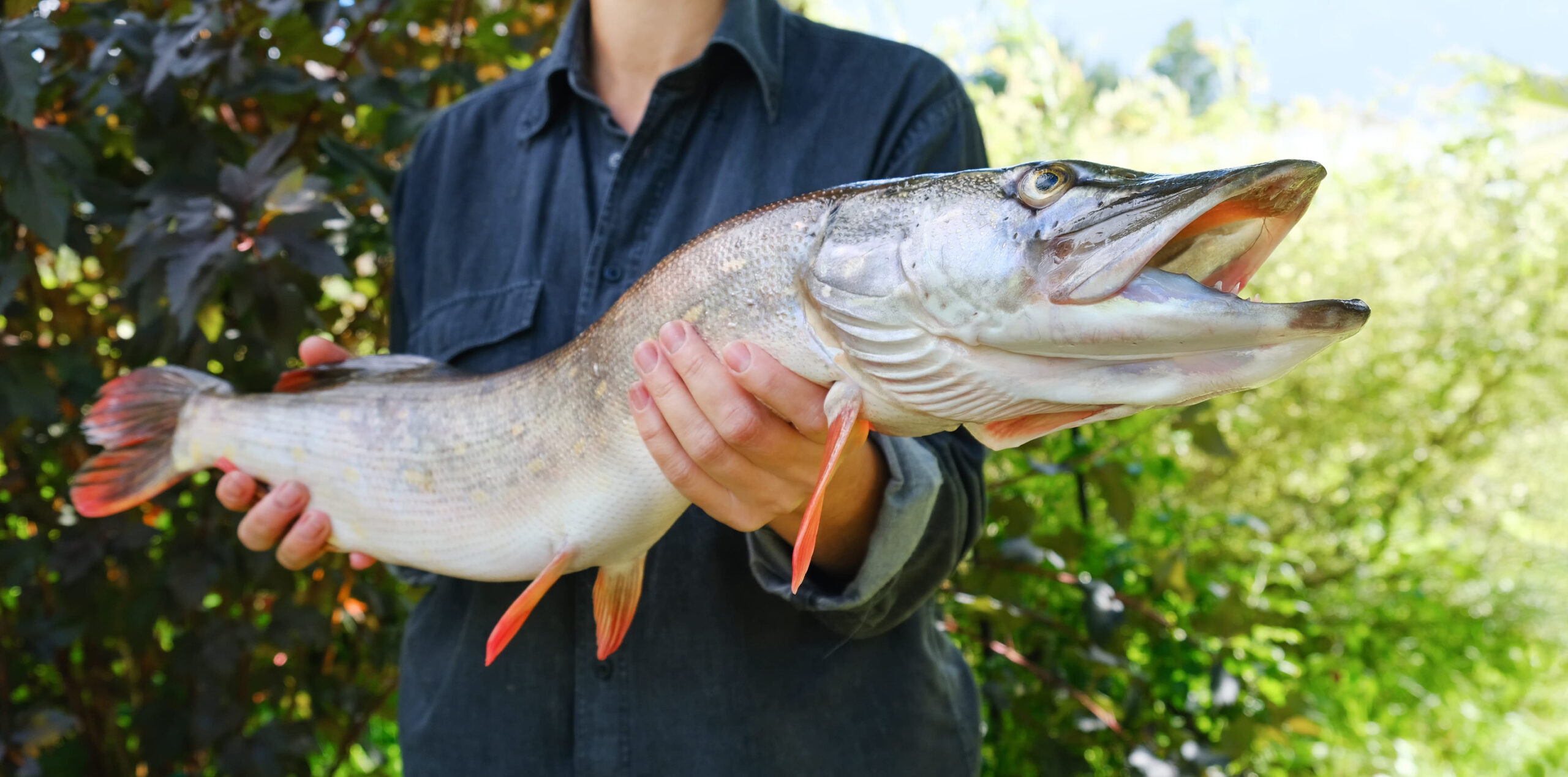
There is something different about chasing muskies in Minnesota during fall. The mornings are colder. Boat traffic begins to thin. Shorelines trade summer green for autumn color, and dropping water temperatures signal another major seasonal transition below the surface.
For muskie anglers, those changes can create some of the most anticipated fishing of the year.
The Minnesota Department of Natural Resources identifies autumn as a prime time for muskie fishing, noting that muskies tend to feed on larger prey ahead of winter and the following spring’s spawning season. The DNR also reports that many of Minnesota’s largest muskies are caught during October and November.
But productive fall muskie fishing in Minnesota isn’t as simple as throwing a giant lure and hoping a hungry fish finds it.
Water temperature, forage, structure, weather, presentation, lure choice, and equipment all deserve attention. Muskie fishing already places significant demands on an angler and fishing rod. Fall conditions can make matching your technique and muskie rod setup even more important.
Here’s what anglers should understand as Minnesota’s muskie season transitions from September into the colder weeks of late fall.
Muskies are apex predators, and their behavior is closely tied to their environment and available forage.
As autumn progresses, water temperatures decline and conditions throughout Minnesota lakes change. Vegetation begins to deteriorate in some areas, forage may relocate, and muskies adjust accordingly.
Fall also arrives ahead of the long Minnesota winter. According to the Minnesota DNR, muskies tend to feed on larger prey during autumn, making this an especially interesting period for anglers targeting big fish.
That doesn’t mean every muskie suddenly becomes easy to catch.
They remain a challenging species with relatively low population densities. Successful Minnesota muskie fishing still requires patience, observation, and plenty of time on the water.
What fall provides is opportunity.
Although anglers often associate fall muskie fishing with cold October mornings and November giants, September muskie fishing deserves attention of its own.
September can behave like two seasons packed into one month.
Early September may still resemble summer, especially following stretches of warm weather. As nights become longer and temperatures cool, water conditions begin moving toward fall.
That means anglers should avoid assuming that a technique will work simply because it worked the previous September—or even the previous week.
Pay attention to current conditions rather than the calendar alone.
Useful factors to observe include:
September rewards adaptable anglers. If a summer location stops producing, begin looking for signs that forage and muskies have shifted.
Muskies can use a wide range of habitat, which is part of what makes locating them challenging.
The Minnesota DNR identifies weed edges, rocky shoals, points leading toward deeper water, shallow or semi-shallow weedy bays, areas around islands, sunken reefs, humps, and shallow sand flats as potential muskie habitat.
Those areas give fall anglers several options.
Not every weed bed declines at the same rate.
As fall progresses, remaining healthy vegetation can continue providing habitat for prey. Instead of treating every weed line equally, look closely at the condition of the vegetation and signs of forage activity.
A productive green weed edge may deserve more attention than an area where vegetation has already deteriorated substantially.
Rocky points, reefs, humps, and other structural changes can also be important.
Fall anglers should think in terms of connections: shallow water near deeper water, weed edges near open areas, points extending toward depth, or other places where a muskie can move between feeding and holding areas efficiently.
Finding fish remains the first challenge. Even the best custom muskie rod cannot make an unproductive location productive.
One reason fall has such a reputation among muskie anglers is the potential importance of larger forage.
That can make substantial lures part of the fall musky fishing equation, although “bigger” should never become an automatic rule.
The lure still needs to fit the conditions and the behavior of the fish.
Muskie anglers commonly use a wide range of presentations, including:
Each places different demands on the angler and equipment.
A large rubber bait does not load a rod the same way as a buck-tail. A hard-pulling crank-bait creates resistance throughout the retrieve. A jerk-bait requires the angler to actively work the lure.
That is where choosing appropriate muskie fishing rods becomes important.
Muskie fishing is physically demanding. Anglers may make hundreds of casts while throwing lures substantially larger than those used for many other freshwater species.
The rod has to manage that workload.
Rod power describes how much force is required to bend the blank.
For muskie fishing, sufficient power is necessary to cast and control heavy presentations while managing a large fish. But the goal isn’t simply to select the heaviest rod available.
The power should match the lure range and technique.
An angler regularly throwing very large rubber baits may need a different rod than someone primarily fishing smaller buck-tails or jerk-baits. Matching the blank to the presentation can improve control and make repeated casting more manageable.
Rod action describes where the blank bends under load.
Action influences casting, lure control, hook-sets, and how the rod responds once a fish is hooked. Different muskie techniques can benefit from different combinations of power and action.
Rather than choosing a rod because it carries a generic “muskie” label, consider the presentations you actually use.
That is particularly important during fall, when lure choices may change as conditions evolve.
Longer muskie fishing rods are common for good reasons.
Length can help with casting, lure control, sweeping hook-sets, and maneuvering a lure beside the boat. It can also be useful when making the direction changes involved in a figure-eight presentation.
But longer isn’t automatically better for every angler.
Your height, arm length, boat layout, casting style, lure selection, and physical comfort all matter.
A rod that looks impressive on a specification sheet isn’t useful if it feels cumbersome after hours of casting.
This is one area where custom fitting can make a meaningful difference.
Imagine repeatedly casting a large lure on a cold October day with a rod-and-reel combination that constantly feels tip-heavy.
That small imbalance becomes much more noticeable after hundreds of casts.
Balance influences how naturally a rod rests in your hands and how much effort your wrist and forearm expend controlling it. For a demanding style of fishing like muskie casting, ergonomics deserve serious consideration.
LakeLady Custom Fishing Rods incorporates hand and arm measurements into its fitting process and balances the rod with the angler’s chosen reel.
For a custom muskie rod, those details allow the entire setup to be considered together rather than treating the rod as an isolated piece of equipment.
One muskie rod does not automatically excel at every technique.
Before choosing a setup, consider how you spend most of your time on the water.
Ask yourself:
Those answers provide useful information when choosing a rod.
LakeLady’s custom process begins with a conversation about target species, fishing method, and the angler’s preferences. Length, action, power, grip dimensions, reel pairing, and other components can then be considered around the way that individual actually fishes.
That approach is particularly relevant to muskie fishing because the equipment must handle both demanding presentations and demanding fish.
Late-season Minnesota muskie fishing isn’t only challenging because of the fish.
Minnesota weather can become serious.
The DNR specifically cautions that late-autumn fishing on large water can be cold and dangerous. Shorter daylight, colder water, wind, and rapidly changing conditions deserve respect.
Anglers should prepare for the environment as carefully as they prepare their tackle.
Check the forecast, dress appropriately, carry necessary safety equipment, and consider how cold-water conditions change the consequences of an emergency. Late fall isn’t the time to treat boating safety casually.
Also check current regulations for the specific water you plan to fish. For 2026, Minnesota’s inland muskie season runs through December 1, but border waters and specially regulated waters can differ.
Muskies are valuable fish, and responsible handling helps protect the fishery.
LakeLady supports C-P-R: Capture, Picture, Release.
The Minnesota DNR similarly recommends keeping muskies in the water when possible while removing hooks. Having release equipment organized before a fish is hooked can make the process more efficient.
Muskie anglers should consider having appropriate tools readily accessible, including a large landing net, long-handled pliers, hook cutters, and other equipment needed for safe handling.
The goal should be to enjoy the experience while minimizing unnecessary handling time.
Muskies are a limited resource, and responsible fishing practices help preserve the opportunity for another angler—and perhaps yourself—to encounter that fish again.
Muskie fishing exposes weaknesses in equipment quickly.
Heavy presentations, repetitive casting, powerful fish, and long days mean that rod power, action, length, balance, grip design, and component selection aren’t merely technical specifications. They influence the experience every time you make a cast.
A custom muskie rod allows those variables to be considered around the individual angler.
LakeLady’s process begins by identifying the target fish and fishing method. The rod’s length, action, and power can then be selected around those needs, while hand and arm measurements help determine fit. The finished rod is also balanced with the angler’s chosen reel.
For someone who spends serious time pursuing muskies, that individualized approach can help create equipment suited to both the technique and the person using it.
There is a reason dedicated muskie anglers look forward to fall.
September begins the transition. As Minnesota moves deeper into autumn, cooling water, changing habitat, and feeding behavior create new challenges and opportunities. October and November have a particular reputation for producing impressive fish, but success still requires patience.
Pay attention to current conditions. Follow the forage. Evaluate healthy vegetation and structural transitions. Adjust presentations rather than relying on a single seasonal formula.
And make sure your equipment matches the way you fish.
The best muskie rod setup isn’t simply the biggest or heaviest rod you can find. It is a combination of power, action, length, balance, reel, line, lure range, and fit that supports the techniques you actually use.
Fall muskie fishing in Minnesota may still require plenty of casts. That’s part of the pursuit. But with thoughtful preparation, appropriate equipment, and respect for the fish and changing fall conditions, those cold days on the water can become some of the most memorable of the entire fishing season.
For information about custom muskie rods, rod power and action, individual fitting, reel balance, or the LakeLady rod-building process, contact:
LakeLady Custom Fishing Rods
29297 Piney Way
Breezy Point, MN 56472
Phone: (218) 251-2626
Email: rodbuilder@lakeladyrods.com