
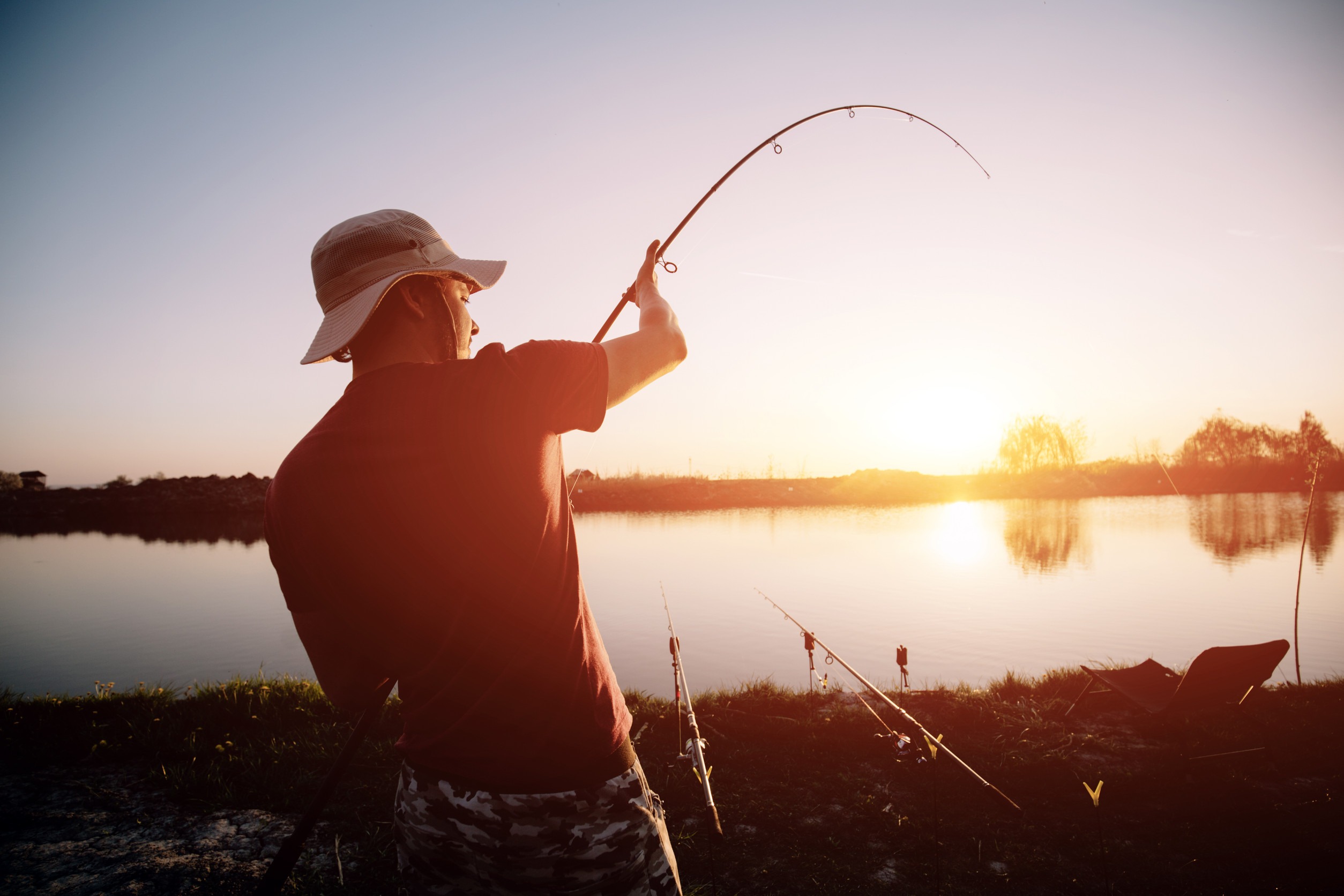
Walk through a fishing rod aisle or start researching a custom fishing rod. You will quickly encounter terms such as medium-light, medium, medium-heavy, moderate, fast, and extra-fast. For many anglers, however, they can create confusion, especially when Fishing Rod Action is mistaken for power.
They aren’t.
Power describes how much force is required to bend a rod.
The term Fishing Rod Action describes where along the blank that bending occurs.
A fishing rod can be medium power with fast action, or medium-heavy power with moderate action, among many other combinations.
Understanding rod power vs rod action makes evaluation easier. It helps you evaluate a rod based on what you actually need it to do. Target species matters, but so do lure weight and fishing technique. Hook style, cover, line, sensitivity, casting requirements, and personal preference also matter.
Here is how these two important Fishing Rod Action specifications work.
Moreover, they explain why both deserve attention when selecting a custom fishing rod.
Another simple way is to remember the distinction.
Those definitions sound simple.
However, Fishing Rod Action and the way power and action work together influence how a rod behaves on the water.
Power and Fishing Rod Action help determine the load a rod can comfortably handle. Action affects how quickly and where the blank responds to that load.
Think of them as two separate characteristics describing the same blank. However, knowing only that a rod is “medium” or “fast” does not provide the full picture. Understanding both gives you much more useful information about its Fishing Rod Action and intended performance.
Fishing rod power refers to the amount of force needed to make the blank bend. Power categories commonly range from ultralight and light through medium-light, medium, medium-heavy, heavy, and extra-heavy.
In general, lighter-power rods require less force to bend. Additionally, heavier-power rods require more.
This is why rod power often corresponds with lure weights, line strengths, and fish sizes. Additionally, it aligns with the types of cover a rod is designed to handle.
Light and ultralight rods are typically associated with smaller presentations, lighter line, and species such as panfish and trout. They allow lightweight lures to load the blank more naturally and can make smaller fish enjoyable to fight.
Casting an extremely light lure on a rod that is far too powerful can be difficult.
However, it may not provide enough load to flex the blank effectively.
Medium-light and medium rods occupy a useful middle ground for many freshwater applications. Moreover, the Fishing Rod Action depends on the rod design and can work well for walleye, bass, and popular species.
That does not mean every medium-power rod behaves the same. For instance, action, length, lure rating, materials, and overall blank design can make two medium-power rods feel substantially different.
As lure weight, fish size, line strength, or cover increases, anglers, however, often move toward more powerful rods.
Bass anglers working heavy vegetation, for example, may need additional backbone to control fish around cover.
Moreover, muskie anglers casting substantially larger presentations place entirely different demands on their equipment.
This contrasts with jigging a lightweight walleye presentation.
The key is to choose enough power for the application.
However, do not select simply the most powerful rod available.
Power tells you how much force is needed to bend the blank. Additionally, Fishing Rod Action describes where that bending takes place.
Fast-action rods bend primarily toward the tip. Moderate-action rods flex farther down the blank. Slower-action rods distribute the bend over a larger portion of the rod.
For instance, an extra-fast or fast-action rod concentrates much of its initial flex toward the upper portion of the blank.
The lower blank remains relatively firm.
Fast actions are commonly associated with techniques where anglers value responsiveness, sensitivity, lure control, and quick hook-sets. Additionally, jigging and other bottom-contact presentations are good examples.
For an angler trying to distinguish a subtle bite from rock, weed, or bottom changes, responsive feel can be valuable.
Moreover, this helps cues become clearer during a strike.
A moderate-action rod bends progressively farther into the blank. Additionally, that more forgiving bend can be useful with moving baits and presentations using treble hooks.
Rather than transferring force as abruptly, the rod can absorb more of the load.
Additionally, this may help keep pressure on a moving fish and reduce the likelihood of pulling smaller treble hooks free.
Moderate actions can also load smoothly during casting.
Additionally, this makes them useful for presentations where casting characteristics and forgiveness are priorities.
Slow-action rods bend deeply through a substantial portion of the blank.
However, they are less common for many modern freshwater techniques but stay useful where a deep, forgiving bend helps.
The important point when choosing fishing rod action is that faster is not automatically better. However, the correct action depends on what you want the rod to accomplish.
Confusion often comes from the everyday words anglers use to describe rods.
Someone may call a rod “stiff,” “soft,” “light,” or “heavy.” Those descriptions can refer to different characteristics depending on the person using them.
A rod can have relatively heavy power and still possess an action that allows substantial flex in the upper blank. Another can have lighter power but a fast action concentrated toward the tip.
This is why learning basic fishing rod terminology can be helpful when comparing equipment or discussing a custom build. Instead of saying, “I want a stiff rod,” an angler can explain the lure, target species, technique, cover, and performance characteristics they prefer.
Those details provide much more useful information.
Understanding rod power vs rod action becomes especially useful when you stop looking at each specification independently.
Imagine two rods that both have fast action. One is medium-light power and the other is heavy power. Both concentrate much of their initial bend toward the tip, but the amount of force required to load those blanks can be dramatically different.
Now consider two medium-power rods. One has fast action and one has moderate action. They may require similar general levels of force to bend, but where and how they flex can make them better suited to different presentations.
The combination affects characteristics such as:
This is why a complete fishing rod selection involves more than choosing a power rating and moving on.
Lure weight is one of the most practical ways to think about rod power.
Every blank is designed around a working range. A lure within an appropriate range allows the blank to load during casting and gives the angler useful control over the presentation.
A lure that is too light for the rod may not provide enough load to make casting feel natural. A lure that is too heavy can overload the blank and make casting less controlled while placing unnecessary stress on the rod.
The lure’s behavior also matters.
A jig and a deep-diving crank-bait might weigh the same on a scale, yet the crank-bait can create substantially more resistance when moving through the water. Rod selection should therefore account for both lure weight and how the presentation behaves once it is being fished.
Once power is appropriate for the lure and application, consider how you want the rod to respond.
For bottom-contact presentations, a fast or extra-fast action may provide the crisp response an angler wants for lure control and bite detection. For crank baits and other moving presentations—especially those using treble hooks—a more moderate action may offer a useful degree of forgiveness.
This does not mean every jig requires fast action or every crank-bait requires moderate action. Fishing style, lure design, line, fish species, and personal preference all influence the decision.
Rather than memorizing rigid rules, ask what the presentation requires from the rod.
Additionally, one common mistake in fishing rod selection is shopping exclusively by species.
Consider walleye.
Additionally, an angler vertically jigging a lightweight presentation may prioritize sensitivity and a responsive tip.
However, another angler trolling for the same species is asking the rod to perform a very different job.
Bass fishing provides another example.
Moreover, a finesse presentation in open water does not place the same demands on a rod.
It differs from pulling a fish from thick vegetation.
Both rods may be labeled for bass, but their ideal power and action can differ considerably.
Moreover, the same principle applies to pike, muskie, panfish, trout, and other species.
Start with the fish, but don’t stop there.
Additionally, Technique provides much of the information needed to choose the right combination.
Your rod doesn’t operate independently. Additionally, line, hooks, reel, lure, and rod form a complete system.
Additionally, Line characteristics can change how directly force transfers between the angler and lure. Hook style also matters. Moreover, A presentation using a single hook may benefit from different rod characteristics than a lure carrying small treble hooks.
Cover adds another consideration. Additionally, Fishing around heavy weeds or other structure can require additional power to control fish compared with an open-water presentation.
Instead of looking for a single specification that determines the ‘best’ rod, consider how all of these variables interact.
Additionally, this approach reveals how their combined effects shape overall performance.
Indeed, this is where custom fishing rod design becomes particularly useful.
A mass-produced fishing rod needs to satisfy a relatively broad group of anglers. A custom rod can begin with one person’s fishing style.
LakeLady Custom Fishing Rods begins its process with a conversation about rod type, target fish, methods, and the angler’s preferences.
Additionally, Length, action, and power are then among the specifications considered during the design process.
Furthermore, LakeLady incorporates hand and arm measurements for a custom grip and the angler’s chosen reel in the setup.
However, instead of asking only, ‘What species are you fishing for?’, the custom-building process can consider more specific questions. It enables better targeting.
Additionally, the answers help determine which combination of power, action, length, materials, and components makes sense.
You don’t need specialized equipment to begin understanding power and action. Pay closer attention to your existing rods the next time you’re on the water.
Start with the specifications printed on the blank, then compare those numbers and terms with what you actually feel.
Does the rod load naturally when you cast your most-used lure? Can you control the presentation easily? Does the tip respond the way you want? Do you have enough backbone when setting the hook or controlling a fish? Does the rod feel unnecessarily stiff for the lure? Does it bend more deeply than you prefer?
Try comparing two rods with different specifications side by side. Feeling the difference between medium-light and medium-heavy power, or between moderate and fast action, can make these terms much easier to understand than reading definitions alone.
Fishing rod terminology is useful, but ratings are not a universal measuring system in which every manufacturer’s “medium” or “fast” feels exactly the same.
Blank design, materials, construction, length, taper, and other factors influence the finished rod. Two rods carrying similar labels may still behave differently in your hands.
That makes specifications a starting point rather than the entire decision.
For anglers considering a custom fishing rod, explaining how and where you fish is often more useful than arriving with a predetermined power and action based solely on terminology.
A knowledgeable builder can use those real-world details to help translate your fishing style into appropriate rod characteristics.
When all the terminology begins to feel complicated, return to the basic distinction:
Power tells you how much force it takes to bend the rod. Action tells you where the rod bends.
From there, think about how the two characteristics work together.
Your target species matters, but so do your lure weight, technique, line, hooks, cover, casting needs, and personal preferences. A rod designed around those factors is more useful than one selected simply because a label says it is intended for a particular fish.
Understanding rod power vs rod action gives anglers a better vocabulary for evaluating fishing rods and a stronger foundation for choosing equipment. It can also make conversations with a custom rod builder much more productive because you can connect the way a rod behaves with the way you actually fish.
There isn’t one ideal combination of power and action for every angler. The goal is to find the combination that fits the job.
For questions about fishing rod power, rod action, custom rod specifications, individual fit, or the LakeLady rod-building process, LakeLady Custom Fishing Rods can be contacted at:
LakeLady Custom Fishing Rods
29297 Piney Way
Breezy Point, MN 56472
Phone: (218) 251-2626
Email: rodbuilder@lakeladyrods.com