
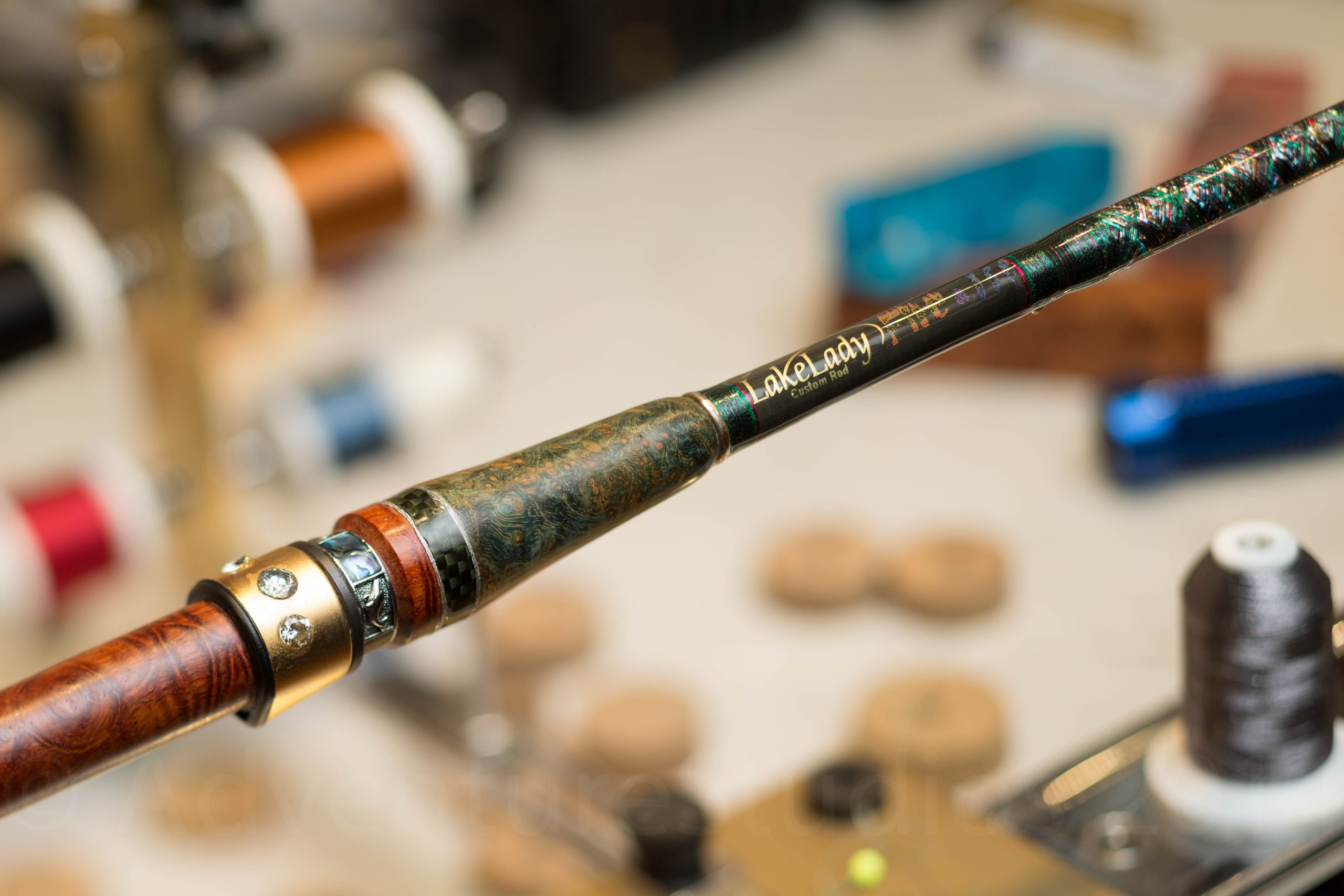
Vertical jigging looks simple. Drop a jig beneath the boat, maintain contact with the presentation, work it through the strike zone, and wait for a fish to bite.
But anyone who has spent time vertical jigging for walleye knows how much information travels through the fishing rod.
Was that a rock or a bite? Did your jig touch bottom? Are you drifting too quickly? Did the lure pick up a piece of vegetation? Did a walleye inhale the bait without producing the obvious strike you were expecting?
The right vertical jigging rod helps you answer those questions.
Rod length, power, action, sensitivity, weight, balance, grip design, reel pairing, line, and jig weight all influence how connected you feel to the presentation. That is especially important for Minnesota walleye anglers, where vertical jigging remains a valuable technique.
Rather than searching for one universal “best” jigging rod, it helps to understand what makes a rod well suited to the way you jig.
Vertical jigging differs from techniques that depend heavily on casting distance. Most of the action happens directly below or relatively close to the boat.
That changes what you need from the rod.
A quality jigging fishing rod should help you:
The entire setup should feel connected.
When you lift the rod tip, you should understand what the lure is doing. When the jig returns toward bottom, you should be able to recognize that contact. When something changes unexpectedly, the rod should help communicate it.
That’s why sensitivity receives so much attention in vertical jigging—but sensitivity isn’t the only characteristic that matters.
Walleye don’t always announce themselves with an aggressive strike.
Sometimes you feel a tap. Sometimes the jig suddenly feels heavier. Other times the line changes direction, the lure stops sooner than expected, or something simply feels different.
A sensitive jigging rod helps transmit those changes through the blank and into your hand.
Sensitivity also helps with more than detecting bites. It can help an angler distinguish hard bottom from soft bottom, rocks from weeds, and bottom contact from a fish interacting with the lure.
That information can improve your presentation.
However, sensitivity isn’t produced by one component alone. Blank construction matters, but so do guides, grip configuration, reel seat, line, reel, lure weight, and overall rod balance.
Think of sensitivity as the result of a complete fishing system rather than a single specification printed on a rod.
Rod length can significantly affect how a vertical jigging setup feels.
LakeLady’s existing walleye guide identifies roughly 6’3″ to 6’10” as a useful range for vertical jigging. That range can provide the control and precision anglers often want when fishing primarily below the boat.
A relatively compact rod can make it easier to perform small, controlled movements without turning every wrist motion into an exaggerated lure movement.
But there is no mandatory length for every angler.
Your height, arm length, boat configuration, preferred jigging motion, fishing depth, and personal comfort all matter.
This is an important distinction when looking for the best rod for vertical jigging. The best length isn’t simply the number most anglers use. It is the length that gives you the control you need while fitting your body and fishing style.
Rod power describes how much force is required to bend the blank.
For many walleye jigging applications, medium-light power is a popular starting point because it can provide a useful combination of sensitivity, lure control, and backbone. But the correct power depends on the jig weights, depth, current, fish, and conditions you encounter.
The Minnesota DNR recommends selecting a jig heavy enough to feel bottom without making it unnecessarily heavy. It cites common walleye jig weights such as 1/8, 1/4, and 3/8 ounce depending on the situation.
Your rod should work naturally with the weights you use.
A rod that is too powerful for a light jig may feel stiff and disconnected. The lure may not load the blank effectively, making subtle control more difficult.
On the other hand, a rod that is too light for the presentation can feel overloaded.
For a Minnesota walleye rod, matching power to your actual jigging conditions is more useful than simply assuming heavier is better.
Rod action describes where the blank begins bending under load.
Fast-action rods concentrate more of their initial flex toward the tip, while moderate-action rods bend farther into the blank.
For vertical jigging, a fast action is often useful because it can provide the responsive feel and lure control many anglers want. A responsive tip allows relatively small movements of your hand to influence the jig while the lower portion of the blank provides additional support.
That combination can also help when it’s time to set the hook.
However, labels are only part of the story. One manufacturer’s fast-action rod may not feel identical to another manufacturer’s. Blank material, taper, length, power, and construction all influence the final result.
This is why physically understanding the intended fishing technique matters when selecting a custom jigging rod.
One of the most practical rules in jigging is to use enough weight to maintain the contact and control you need.
Fishing deeper water may require a heavier jig. Wind, current, drift speed, and line diameter can also influence the weight needed to keep the presentation where you want it.
Take Me Fishing similarly recommends matching jig weight to fishing depth, noting that deeper water generally requires more weight to reach bottom effectively.
But simply adding weight isn’t always the answer.
An unnecessarily heavy jig can change the presentation and how the setup feels. The objective is to find enough weight for effective control while maintaining the presentation you want.
Your vertical jigging rod should therefore be selected around the jig-weight range you actually fish most often.
Vertical jigging requires you to hold and manipulate the rod continuously. That makes balance particularly noticeable.
A rod can be extremely lightweight on a scale yet feel awkward once a reel is attached. If the finished combination pulls heavily toward the tip, your hand and forearm continually compensate.
After several hours, that can contribute to fatigue.
A properly balanced rod-and-reel combination tends to rest more naturally in your hand. It can also make subtle rod movements easier to control.
LakeLady addresses this directly during its custom-building process. The rod is balanced with the angler’s chosen reel rather than treating the rod and reel as completely separate pieces of equipment.
That can be especially useful for a technique in which the rod remains in your hand for much of the day.
Grip design is another area where individual preference matters.
Hand size, arm length, the way you hold the rod, and how you position your fingers around the reel seat can all influence comfort and feel.
A grip that works perfectly for one angler may feel awkward to another.
LakeLady incorporates hand and arm measurements when fitting a custom rod. Those measurements help tailor the grip and overall rod to the individual angler.
For vertical jigging, where subtle movements and prolonged rod handling are common, those ergonomic details can become meaningful.
The goal isn’t simply to make the rod look customized. The goal is to create a fishing tool that feels natural in the angler’s hands.
The reel affects the balance and overall feel of your walleye jigging rod.
A reel that is unnecessarily heavy can change the character of an otherwise lightweight rod. One that is too light for a particular setup may also alter the balance point.
LakeLady’s broader walleye guidance identifies 2500- to 3000-size spinning reels as a useful general range for many walleye applications, but reel models and weights vary considerably.
Instead of selecting reel size in isolation, consider how the actual reel feels when paired with the rod.
You are fishing with the combination, not two separate specifications.
Line is another part of the communication chain between the jig and your hand.
Many walleye anglers use braided main line because its relatively low stretch can provide direct feedback, sometimes pairing it with a fluorocarbon or mono filament leader depending on conditions and preferences. Others prefer mono filament for its handling and stretch characteristics.
There isn’t one required line choice for every vertical jigging situation.
Water clarity, depth, structure, jig weight, fishing style, and personal preference can all influence the decision.
What matters is recognizing that your line changes how the entire setup behaves. A highly sensitive blank cannot be evaluated completely without considering what connects it to the lure.
This is where a custom jigging rod can offer something different from simply selecting a rod from a rack.
LakeLady Custom Fishing Rods begins its process with a conversation about the angler’s target species, fishing method, rod type, and preferences. Length, action, and power are selected with those needs in mind.
Hand and arm measurements help determine fit, and the rod is balanced with the angler’s chosen reel.
For someone who spends substantial time vertical jigging, that means the build can start with very specific questions:
Those answers can guide decisions about the blank and components instead of asking the angler to adapt to a one-size-fits-all setup.
Before replacing your current rod, pay close attention to it on your next fishing trip.
Ask yourself whether you can consistently feel bottom. Notice whether rocks, weeds, and changes in bottom composition feel distinct. Pay attention to how clearly you recognize subtle bites.
Then evaluate comfort.
Does the setup feel tip-heavy after several hours? Is the grip comfortable? Can you make precise jig movements without excessive effort? Does the rod feel appropriate for your most-used jig weights?
Also consider whether you are trying to make one rod perform too many unrelated techniques.
Versatility has value, but a rod designed specifically around vertical jigging can prioritize characteristics that matter most for that presentation.
There isn’t one specification that automatically creates the best rod for vertical jigging.
A good setup brings several characteristics together: appropriate length, compatible power and action, useful sensitivity, correct lure-weight range, comfortable grip design, proper reel pairing, and good overall balance.
For Minnesota walleye anglers, that combination can make vertical jigging feel more intuitive. Instead of fighting the equipment, you can concentrate on maintaining bottom contact, controlling the presentation, recognizing changes, and responding when a fish takes the bait.
The right vertical jigging rod won’t locate walleye or make every fish bite. What it can do is provide a more direct connection to what is happening beneath the boat.
And for a technique built around feel, control, and subtle changes, that connection matters.
For information about vertical jigging rods, custom walleye rods, individual rod fitting, action and power, reel balance, or the LakeLady rod-building process, contact:
LakeLady Custom Fishing Rods
29297 Piney Way
Breezy Point, MN 56472
Phone: (218) 251-2626
Email: rodbuilder@lakeladyrods.com