
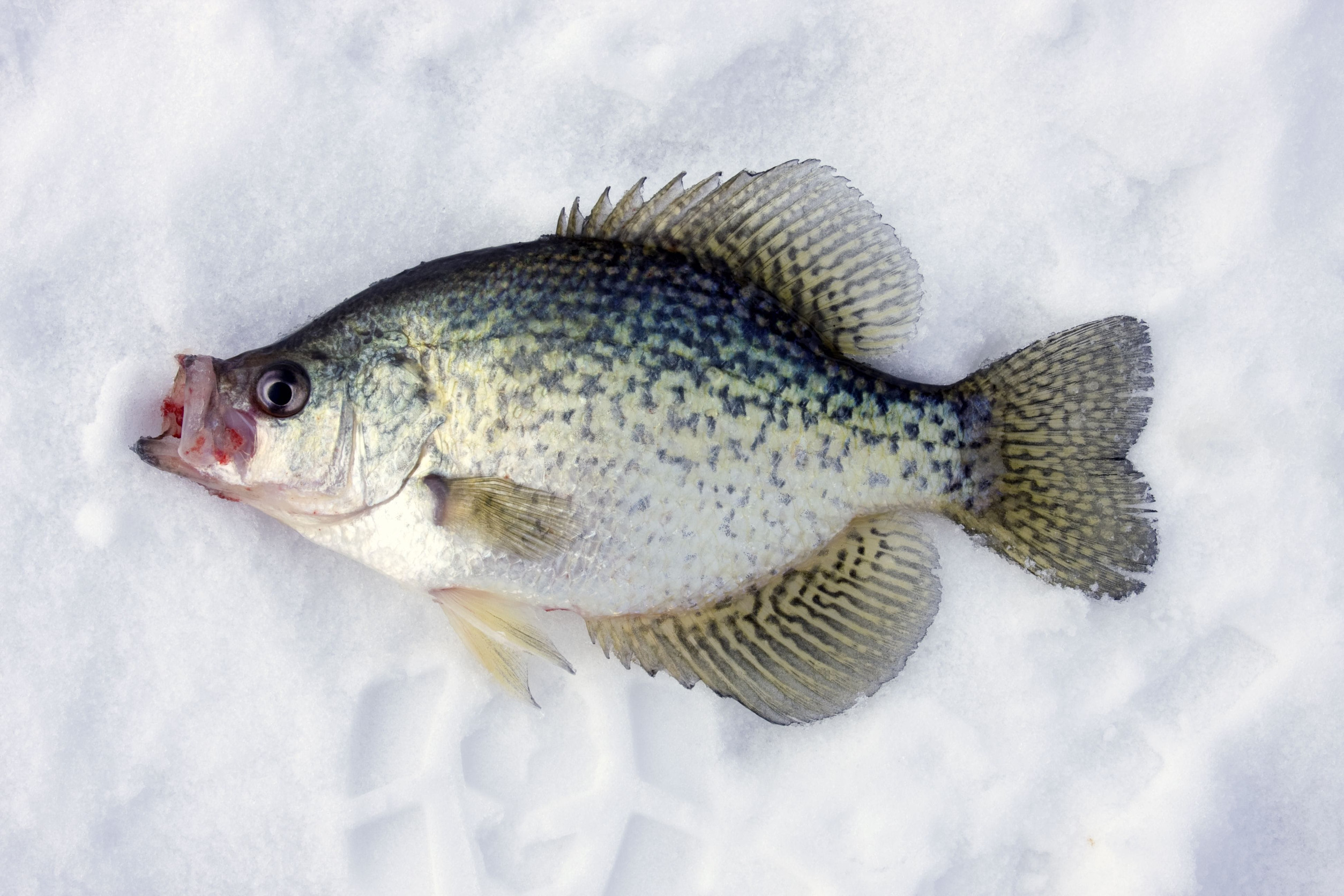
Anyone who has spent time ice fishing for panfish, including crappies or bluegills, knows how frustrating a light bite can be. One minute, you’re watching a fish approach your jig on the electronics. The next, your bait is gone, and you never felt a thing.
While fish behavior certainly plays a role, your fishing rod might also be part of the problem.
Choosing the right panfish ice fishing rod can help you recognize those barely noticeable bites, control smaller presentations, and keep fish hooked without putting too much pressure on light fishing line.
However, not every lightweight rod performs the same way. Rod length, power, action, blank construction, and even handle design can influence your experience on the ice.
Here are seven important things to consider when choosing a rod for Minnesota’s winter panfish season.
Panfish don’t always give anglers much warning when they bite. Sometimes, a bluegill barely moves a jig. A crappie might swim upward with your bait, causing the fishing line to loosen instead of tighten.
These subtle changes are easy to miss with a stiff or poorly matched fishing rod.
A sensitive ice fishing rod helps you recognize changes in tension, lure movement, and pressure. Just as importantly, a responsive tip allows you to see bites that you might not physically feel.
Crappies frequently approach their food from below. When a fish lifts your jig, the tip of your rod may suddenly straighten.
If you’re only watching for the tip to bend downward, you could miss the bite entirely.
A lightweight, responsive tip makes these movements easier to notice. This is particularly helpful during midwinter when panfish may be less aggressive and spend more time inspecting your bait.
Some anglers also use brightly colored rod tips or spring bobbers to improve visual bite detection.
When shopping for ice fishing rods, you’ll frequently see terms such as ultralight, light, and medium-light. These refer to rod power, which describes how much force it takes to bend the blank.
For most panfish applications, ultralight and light-power rods are sensible starting points.
An ultralight rod works well for tiny tungsten jigs, small hooks, and delicate bluegill presentations.
Its flexible design allows small lures to load the tip, making subtle changes in tension easier to recognize.
However, an ultralight rod may feel overwhelmed when working heavier spoons or larger presentations.
A light-power rod offers additional backbone while remaining responsive enough for many panfish techniques.
It’s often a versatile option for anglers who target both crappies and bluegills throughout the winter.
If you regularly switch between small jigs and slightly heavier lures, a light-power rod may offer a comfortable middle ground.
Keep in mind that power ratings aren’t standardized across every rod manufacturer or blank supplier. How the rod actually performs matters more than the label.
Although rod power and action are related, they describe different characteristics.
Power refers to resistance against bending, while action describes where the rod bends under pressure.
A fast-action rod bends primarily toward the tip. A moderate-action rod flexes farther into the blank.
For panfish, a responsive tip combined with a forgiving bend can be particularly useful.
Crappies have relatively delicate mouths, and an aggressive hookset with an overly stiff rod can cause the hook to tear free.
Rather than snapping the rod upward, a controlled lifting motion is often more effective.
A well-designed crappie ice fishing rod should provide enough responsiveness to detect bites while helping maintain steady pressure when bringing the fish toward the hole.
The right combination of power and action also helps protect lightweight fishing line.
Choosing an ice rod length for ice fishing for panfish comes down to more than personal preference. Your fishing environment should influence that decision as well.
Many panfish ice rods fall somewhere between 24 and 36 inches, although shorter and longer options are available.
If you spend most of your time inside a small fish house, a shorter rod may be easier to manage.
You’ll have more room to jig, adjust your line, and bring fish toward the surface without bumping into shelter walls or other equipment.
If you enjoy moving between holes and searching for active schools, a longer rod may feel more comfortable.
Additional length can help with line control and provide more flexibility when fighting fish.
Your seating position matters, too. A rod that feels great when you’re standing might feel awkward when you’re sitting on a bucket close to the ice.
This is one area where a custom rod can accommodate your individual fishing habits.
Although crappies and bluegills are both panfish, they don’t always respond to the same presentations.
Understanding their differences can help you make better equipment decisions.
Crappies often suspend above the bottom, particularly around deeper basins and underwater structure.
Anglers may use small spoons, minnows, soft plastics, or tungsten jigs to target fish at different depths.
A light-power rod with a responsive tip can provide the versatility needed for these presentations.
However, anglers who prefer exceptionally small jigs may benefit from an ultralight setup.
Bluegills have smaller mouths and frequently respond well to tiny presentations that imitate insects and other natural food sources.
A bluegill ice fishing rod should be capable of working these lightweight lures without sacrificing bite detection.
An ultralight rod with a flexible, sensitive tip is often an excellent starting point.
If you regularly target both species, consider which presentations you use most frequently rather than choosing a rod based solely on the fish you hope to catch.
Even an excellent fishing rod can feel unresponsive when paired with unsuitable fishing line, a poorly balanced reel, or the wrong lure weight.
The Minnesota DNR identifies two- to four-pound-test line as a common choice for winter panfish fishing.
Lighter line generally allows small jigs to move more naturally and can be less noticeable to cautious fish.
Monofilament is a practical, forgiving option. Fluorocarbon and ice-specific braided lines also have their advantages, depending on fishing depth and conditions.
Small jigs weighing 1/64, 1/32, or 1/16 ounce are common choices when targeting panfish.
Tungsten jigs are particularly useful because their higher density allows for a compact presentation that sinks relatively quickly.
This can be helpful when crappies are suspended in deeper water.
Your rod tip should respond appropriately to the weight of the jig without bending excessively.
A lightweight spinning reel or inline ice fishing reel can complement a panfish rod.
Look for smooth drag operation, manageable line handling, and comfortable balance.
These seemingly small details can make a difference when fishing with delicate equipment.
Factory-made ice rods offer plenty of options, and many anglers find a setup that works well for them.
However, experienced panfish anglers sometimes discover that their preferred combination of length, sensitivity, action, and grip design is difficult to find in a standard rod.
That’s where customization becomes worthwhile.
At LakeLady Custom Fishing Rods in Breezy Point, Minnesota, the rod-building process begins with a conversation about how you fish.
Blank selection, handle dimensions, guide placement, power, and action are considered alongside your preferences. Individual hand and arm measurements help determine grip fit, and the rod is balanced with your chosen reel.
For someone who spends hours working tiny jigs, a comfortable handle and appropriately responsive tip can be particularly valuable.
A custom ice rod isn’t just about choosing colors or adding a personalized inscription. Its primary advantage is the opportunity to build a rod around the way you actually fish.
One common mistake is assuming that a rod needs more backbone simply because you occasionally catch larger fish.
While additional power may be useful in some situations, an overly stiff rod can make delicate presentations more difficult.
Another mistake is choosing the most flexible rod available without considering lure weight. A tip that bends too much under the weight of your jig may make changes in tension harder to recognize.
It’s also worth considering how comfortable the rod feels with gloves on. A grip that seems fine at home may feel quite different after several hours outdoors.
Try to evaluate the entire setup rather than concentrating on one feature.
Minnesota’s lakes offer excellent opportunities for winter crappie and bluegill fishing, including throughout the Brainerd Lakes Area.
Conditions can change as winter progresses. Fish may move between vegetation, deeper water, and other underwater structures, depending on the lake and available food.
Having a rod that accommodates your preferred techniques makes it easier to adjust your presentation as conditions change.
Remember to check current lake-specific fishing regulations and ice conditions before heading out. Some Minnesota lakes have special panfish possession limits intended to protect fish populations and maintain quality fishing opportunities.
Panfish might be smaller than many of Minnesota’s other popular game fish, but catching them consistently takes patience, attention, and appropriately matched equipment.
The best rod for ice fishing for panfish should offer useful sensitivity, comfortable handling, and enough backbone for your preferred presentations.
Whether you’re searching for suspended crappies or working tiny tungsten jigs for bluegills, the right combination of components can help you recognize bites that might otherwise go unnoticed.
Sometimes, the smallest details make the biggest difference on the ice.
LakeLady Custom Fishing Rods specializes in handcrafted fishing rods designed around individual anglers, target species, and preferred fishing techniques.
For information about custom rod construction, blank selection, sensitivity, rod action, or personalized grip fitting, contact:
LakeLady Custom Fishing Rods
29297 Piney Way
Breezy Point, MN 56472
Phone: (218) 251-2626
Email: rodbuilder@lakeladyrods.com