
There is something special about fishing Minnesota lakes as temperatures begin to drop. The summer crowds thin out, the shorelines change color, and cooler water brings new opportunities for anglers willing to adjust their approach.
But fall fishing also presents a challenge: not every fish announces its presence with an aggressive strike.
Sometimes a walleye barely taps a jig. A bass may pick up a soft plastic without an obvious tug. A lure might suddenly feel heavier, stop falling unexpectedly, or produce a small change in line tension.
Those subtle signals can be easy to miss, especially when wind, current, deeper water, or lightweight presentations complicate the situation.
That’s where a sensitive fishing rod becomes particularly valuable.
Understanding fishing rod sensitivity can help anglers recognize what’s happening beneath the surface, adjust their presentations, and make more informed equipment choices.
Fish behavior changes as water temperatures decline, but not every species responds the same way.
Water temperature influences metabolism, feeding behavior, movement, and habitat preferences. As conditions change, fish may relocate, pursue different forage, or respond differently to certain presentations.
That doesn’t mean every fish becomes sluggish when the water cools. Fall can produce aggressive feeding activity, particularly when predators are following baitfish.
However, anglers often encounter situations where slower presentations and lighter bites become important.
During cold water fishing, a fish may take a lure without producing the dramatic strike an angler expects.
A walleye might gently inhale a jig. A bass may pick up a lure while it rests near bottom. Sometimes the first indication of a fish is simply a change in pressure.
Recognizing those signals requires attention, technique, and equipment capable of communicating subtle changes.
Fishing rod sensitivity refers to how effectively a rod communicates vibration, pressure changes, and other feedback from the lure to the angler.
When a lure contacts a rock, brushes vegetation, or encounters a fish, information travels through the fishing line and rod.
The angler interprets that information through the handle, reel seat, blank, and hand.
A sensitive rod helps make those signals easier to recognize.
But sensitivity involves more than feeling an occasional tap.
It can help anglers identify:
These details help anglers understand how their presentation behaves underwater.
The more clearly you recognize normal lure behavior, the easier it becomes to notice when something changes.
One of the biggest benefits of a sensitive fishing rod is improved awareness when detecting light bites.
A light bite doesn’t always feel like a tap.
Sometimes a fish takes the lure while swimming toward the boat, creating unexpected slack. Other times the lure simply stops moving.
An angler who expects every bite to produce a noticeable strike may overlook these signals.
The first step is becoming familiar with your presentation.
Pay attention to how the jig feels when it touches bottom. Notice the difference between gravel, rock, and vegetation.
Then watch for changes.
If the jig suddenly feels heavier, the line moves sideways, or the lure stops before reaching bottom, something may have changed.
Not every unusual sensation is a fish, but recognizing the difference begins with understanding what normal contact feels like.
Even a highly sensitive rod cannot communicate every bite through vibration alone.
Slack line can reduce the feedback reaching your hand.
Watching the line provides another source of information, especially during a lure’s fall.
A sudden twitch, sideways movement, or unexpected pause can indicate that something has contacted the presentation.
The most effective anglers combine what they feel with what they see.
The blank is the foundation of a fishing rod, and its construction influences how the finished rod behaves.
Fishing rod blank sensitivity depends on several factors, including material, design, taper, construction, and how the blank responds to vibration and pressure.
Graphite blanks are commonly associated with responsive, lightweight fishing rods.
Their characteristics can make them particularly useful for techniques where anglers want direct feedback from the lure.
Fiberglass blanks often provide a more forgiving bend and are useful for applications where flexibility and shock absorption are priorities.
Neither material is automatically superior for every technique.
A rod designed for bottom-contact jigging may prioritize different characteristics than one intended for crankbaits or other moving presentations.
The important consideration is how the blank supports the intended fishing method.
A premium blank doesn’t automatically guarantee that the finished rod will feel ideal.
Rod action, power, length, guide placement, grip design, reel selection, and balance all influence the experience.
This is why custom fishing rod sensitivity should be evaluated as part of the complete rod rather than as a single material specification.
Rod action and power are often confused, but they describe different characteristics.
Power refers to how much force is required to bend the blank. Action describes where that bending occurs.
For many jigging and bottom-contact applications, anglers prefer a fast-action rod because its responsive tip can help communicate subtle changes while providing controlled lure movement.
Rod power should match the lure weight and fishing conditions.
A rod that’s too powerful for a lightweight jig may feel stiff and poorly matched to the presentation. A rod that’s too light for a heavier lure may become overloaded.
Neither situation is ideal.
The objective is to select a combination that allows the lure to work naturally while maintaining useful feedback.
Minnesota walleye anglers understand how important subtle feedback can be.
Walleye fishing frequently involves jigs, live-bait presentations, and techniques that require maintaining contact with the lure.
The Minnesota Department of Natural Resources notes that walleye bites on slip-sinker rigs can be extremely light. It also recommends choosing a jig heavy enough to feel bottom without using unnecessary weight.
Both examples illustrate why a sensitive walleye rod can be valuable.
When vertical jigging, anglers need to recognize bottom contact while monitoring changes in pressure.
When working a jig along structure, they may need to distinguish between rocks, vegetation, and a possible bite.
A properly matched rod can help communicate those differences.
However, the ideal walleye rod depends on the technique. Vertical jigging, casting jigs, trolling, and live-bait presentations place different demands on the equipment.
Sensitivity should always be considered alongside the intended application.
Your fishing line connects the lure to the rod, making it an important part of the overall system.
Different line materials transmit information differently.
Braided line has relatively little stretch, which can provide direct feedback when fishing jigs and other bottom-contact presentations.
Monofilament offers more stretch, which can be beneficial for certain techniques but may soften some of the feedback reaching the angler.
Fluorocarbon provides another option, with characteristics that make it useful in many fishing situations.
Some anglers combine braided main line with a fluorocarbon or monofilament leader.
There is no single correct line choice for every situation.
Water clarity, fishing depth, lure weight, cover, and presentation style should all influence the decision.
Even an excellent sensitive fishing rod can feel less connected when the line and presentation are poorly matched.
A lightweight lure can be difficult to monitor when fishing deeper water, strong wind, or current.
The Minnesota DNR recommends using enough jig weight to maintain bottom contact without making the presentation unnecessarily heavy.
That balance matters.
A jig that’s too light for the conditions may create excessive slack or make it difficult to recognize bottom contact.
A jig that’s unnecessarily heavy may change the presentation and reduce the subtle movement you’re trying to achieve.
The rod should also match the lure’s working weight.
Choosing compatible lure weight, rod power, and line can help maintain a more consistent connection between the angler and the presentation.
Balance is frequently overlooked when discussing sensitivity.
A rod can have an excellent blank but still feel uncomfortable when paired with the wrong reel.
A tip-heavy combination requires additional effort from the wrist and forearm to maintain position.
During long fishing sessions, that can contribute to fatigue and make subtle movements less comfortable.
A well-balanced rod-and-reel combination tends to rest more naturally in the hand.
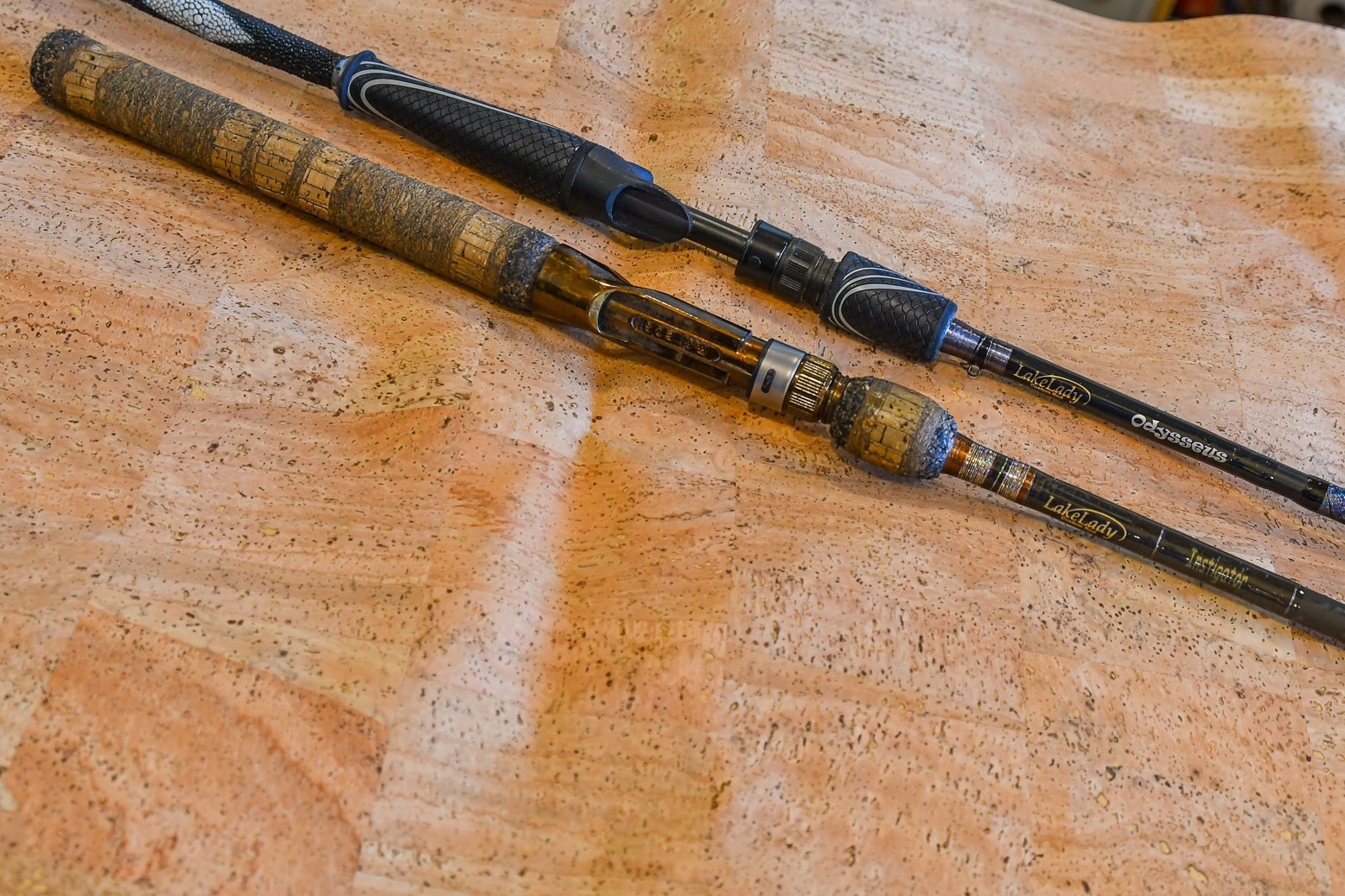
LakeLady Custom Fishing Rods considers the angler’s chosen reel during its building process, allowing balance to be addressed as part of the finished setup.
For techniques that require continuous rod handling, comfort and control can make subtle feedback easier to interpret.
Mass-produced fishing rods are designed to accommodate a broad range of anglers.
A custom fishing rod can begin with more specific information.
LakeLady Custom Fishing Rods starts its building process with a conversation about the angler’s target species, fishing methods, and preferences.
Length, action, power, materials, and other components are selected around those needs.
LakeLady also incorporates hand and arm measurements for a personalized grip and balances the rod with the customer’s chosen reel.
That approach allows the builder to consider how the angler actually fishes.
Someone who primarily vertical jigs for walleye may prioritize different characteristics than an angler who casts finesse plastics for bass or fishes heavier presentations around cover.
The objective isn’t simply to build the lightest rod possible.
It’s to create a comfortable, responsive setup that matches the technique and the individual holding it.
Before deciding whether a different rod would benefit your fishing style, evaluate your current setup.
Consider these questions:
These observations can help identify areas where equipment, technique, or both may need adjustment.
They also provide useful information when discussing specifications for a custom fishing rod.
Cold-water fishing can reward patience, careful observation, and precise presentations.
Some fish strike aggressively. Others provide only a faint signal that something has changed.
A sensitive fishing rod helps anglers recognize those differences.
But sensitivity isn’t created by one component. The blank, action, power, line, lure weight, grip, reel, and balance all contribute to how clearly information travels from the lure to the angler.
Technique remains equally important.
Maintain appropriate line tension. Learn what bottom contact feels like. Watch the line during the fall. Pay attention when the lure behaves differently than expected.
The right equipment won’t make every fish bite, but it can help you recognize more of the information already reaching your presentation.
And during cold water fishing, sometimes the smallest change is the most important one.
For information about sensitive fishing rods, custom walleye rods, blank selection, rod action and power, individual fitting, or the LakeLady rod-building process, contact:
LakeLady Custom Fishing Rods
29297 Piney Way
Breezy Point, MN 56472
Phone: (218) 251-2626