
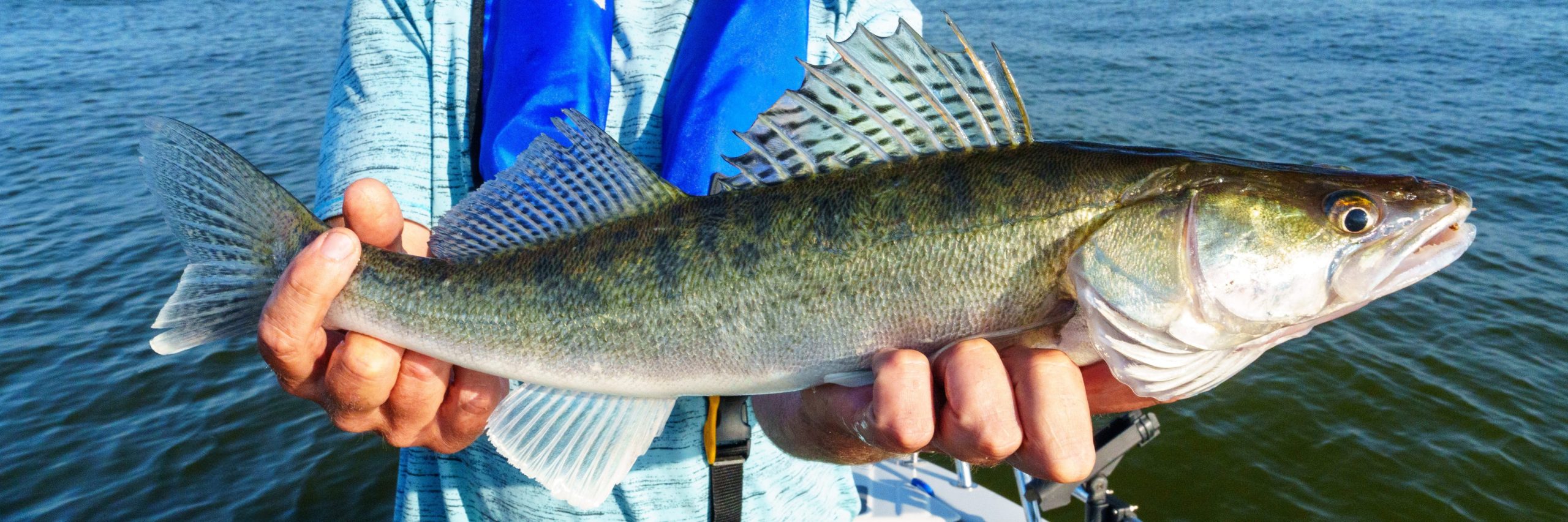
Sometimes a walleye bite is unmistakable.
Other times, it is barely a bite at all.
Your jig may suddenly feel slightly heavier. The line may stop for a fraction of a second. You might feel a faint tick through the rod handle, notice unexpected slack, or simply sense that something has changed at the other end of the line.
That is part of what makes walleye fishing so interesting.
Walleye can take a presentation aggressively, but they are also well known for subtle bites. The Minnesota Department of Natural Resources even describes the bite on a slip-sinker rig as potentially being a very light “tap, tap, tap.”
For anglers, recognizing those subtle changes is critical.
Technique and experience play major roles, but equipment matters too. A fishing rod is the physical connection between the angler, line, lure, bottom structure, and fish. When that system communicates clearly, it becomes easier to distinguish a possible bite from a rock, weed, change in bottom composition, or movement of the lure.
That is where walleye rod sensitivity becomes important.
A sensitive walleye rod does not magically create more bites. Instead, the right rod can help an angler receive and interpret more of the information already traveling up the line.
Understanding how that happens starts with the rod itself.
Rod sensitivity describes how effectively a fishing rod transmits vibration and changes in pressure to the angler.
When a jig contacts rock, gravel, sand, vegetation, or a fish, energy travels from the lure through the line and into the rod. The angler interprets that feedback through the blank, reel seat, grip, and hand.
The clearer that communication is, the easier it can be to understand what is happening underwater.
For walleye anglers, useful feedback might include:
The best rod for detecting walleye bites therefore needs more than a sensitive blank.
It needs to function as a complete system.
Blank material, rod action, power, length, guides, handle design, reel pairing, line choice, lure weight, and balance can all influence what the angler ultimately feels.
The rod blank is the foundation of a fishing rod.
Its materials and construction influence weight, power, action, recovery, durability, and sensitivity. For techniques where bite detection is important, blank selection deserves careful consideration.
A responsive blank can help transmit small vibrations instead of absorbing or muting them.
However, simply choosing the lightest or most expensive blank does not automatically create the ideal walleye rod.
The blank still needs to match the technique.
A rod intended for vertical jigging may require different characteristics than one designed for casting jigs, rigging live bait, or presenting other walleye techniques.
At LakeLady Custom Fishing Rods, freshwater blank selection is part of a larger process that considers target species and fishing method. LakeLady lists Batson RainShadow among its freshwater blank sources and selects components around the intended use of the finished rod.
For walleye anglers, that technique-specific approach is especially relevant.
Sensitivity is most useful when it is paired with the correct performance characteristics.
Rod action describes where a rod bends when pressure is applied.
A faster-action rod generally bends more toward the tip, while a moderate-action rod flexes farther down the blank.
Neither is universally “better.”
The appropriate action depends on the presentation.
For many jigging applications, anglers appreciate a responsive tip paired with sufficient backbone farther down the rod. The tip can help the angler monitor the lure and detect changes while the lower portion of the blank provides control when setting the hook and fighting a fish.
Other presentations may benefit from different actions.
This is why buying a walleye fishing rod based only on species can be limiting.
“Walleye rod” describes the target fish.
It does not describe exactly how that fish will be targeted.
When sensitivity is a priority, rod action should complement the presentation rather than work against it.
Rod power refers to the amount of force required to bend the rod.
For walleye fishing, choosing the correct power involves balancing sensitivity, lure control, and fish-fighting capability.
A rod that is unnecessarily heavy for the presentation may reduce some of the finesse anglers want when working lighter jigs or rigs. A rod that is too light for the lure, depth, current, or technique can feel overloaded and make precise lure control more difficult.
The goal is not simply to use the lightest possible rod.
The goal is to use appropriate power.
Consider:
When those variables are considered together, the rod becomes better suited to its job.
That matters because better lure control often contributes to better bite detection.
If an angler understands how the lure should feel when everything is normal, an abnormal sensation becomes easier to recognize.
A sensitive rod can only communicate information that reaches it.
That makes lure weight an important part of bite detection.
The Minnesota DNR recommends using a jig heavy enough to feel the bottom without making it unnecessarily heavy. That is a useful principle because bottom contact gives the angler a reference point.
When you understand what the jig feels like as it touches bottom, moves over rock, or lifts into the water column, it becomes easier to recognize something different.
And “different” is often what a walleye bite feels like.
The appropriate jig weight changes with:
Rather than automatically choosing the same jig weight every time, anglers can benefit from selecting enough weight to maintain useful contact with the presentation.
Too little weight may make the lure difficult to track.
Too much weight can change the presentation and potentially make finesse fishing less natural.
The right rod and appropriate lure weight work together.
Sensitivity discussions usually focus on the blank.
Balance deserves attention too.
A tip-heavy rod continually places pressure on the angler’s hand and wrist. Instead of holding the rod naturally, the angler may spend the day compensating for its weight distribution.
A properly balanced rod and reel combination can feel more neutral in the hand.
Why does that matter for walleye bite detection?
Because the angler is trying to recognize very small changes.
When the rod already feels cumbersome, subtle feedback has to compete with the physical effort required to hold and manipulate it.
A well-balanced setup can make it easier to concentrate on what is happening at the lure.
LakeLady incorporates reel pairing into its custom rod process, balancing the finished rod around the angler’s chosen reel rather than considering the rod as an isolated piece of equipment.
For anglers who jig for hours at a time, that attention to balance can also contribute to comfort.
Reducing unnecessary weight can help a rod feel crisp and responsive.
But overall weight should not be considered independently from balance, strength, durability, and technique.
A very lightweight rod that is poorly balanced may feel less comfortable than a slightly heavier rod with excellent balance.
Likewise, removing weight without considering durability or component performance is not necessarily an improvement.
The objective is efficiency.
Every component should have a reason for being there.
On a thoughtfully designed walleye rod, the blank, guides, reel seat, grips, and other components work together to produce the intended action and feel without unnecessary bulk.
Fishing rod guides may appear simple, but they have an important role.
They control the path of the line along the blank and help distribute load as the rod bends.
Guide size, weight, placement, and construction can affect the finished rod’s overall performance.
Unnecessary weight toward the tip can influence how a rod feels and responds. Guide placement also needs to complement the way the blank loads.
This illustrates an important principle of custom fishing rod construction:
Sensitivity is not created by one component.
A premium blank combined with poorly matched components will not necessarily perform to its full potential.
A sensitive walleye rod should be considered from butt to tip as one integrated fishing tool.
The grip is the interface between the rod and the angler.
That makes grip design particularly important when bite detection is a priority.
Grip length, diameter, material, and reel seat placement can all affect comfort and the way the rod sits in the hand.
LakeLady’s custom process includes hand and arm measurements when designing a rod. The objective is to create a grip and rod configuration suited to the individual angler rather than relying solely on standardized dimensions.
That personalized fit has an obvious comfort benefit.
It can also matter when an angler spends long periods holding a rod in a consistent position and paying attention to subtle feedback.
A grip that fits naturally requires less adjustment.
The angler can focus on fishing.
There is no single perfect walleye rod length.
Rod length influences casting distance, line control, leverage, lure movement, balance, and the overall feel of the setup.
A vertical jigging rod, for example, may have different requirements than a rod used to cast jigs away from the boat.
Longer rods can provide advantages for casting and line management in certain situations. Shorter configurations may offer benefits for precise vertical presentations.
The important point is that rod length should have a purpose.
Choosing length simply because a particular measurement is popular overlooks how personal fishing can be.
Boat layout matters.
Angler height matters.
Casting style matters.
Technique matters.
A rod built around those factors is more likely to feel intuitive in use.
Even the most sensitive rod cannot operate independently of the fishing line.
Different line materials stretch and behave differently, influencing the amount and type of feedback reaching the angler.
Low-stretch line can provide very direct feedback in some walleye applications, while other line and leader combinations may be selected for presentation, abrasion resistance, visibility, or fish behavior.
Rather than treating the rod and line as separate decisions, anglers should think about the entire setup.
Ask:
What rod am I using?
What line am I pairing with it?
What lure or rig am I fishing?
At what depth?
How much line is between me and the lure?
Those variables affect the feedback that reaches your hand.
The best walleye rod setup is therefore a system rather than a collection of unrelated specifications.
One of the best ways to detect more subtle walleye bites does not require buying anything.
Learn your presentation.
Pay attention to what your jig feels like when it hits bottom.
Notice the difference between gravel and softer substrate.
Learn how vegetation feels.
Pay attention to the resistance of the lure during a normal retrieve.
Watch your line as the lure falls.
The more familiar you become with normal feedback, the easier it becomes to recognize something unusual.
A bite may feel like a tap.
It may feel like added weight.
But sometimes a walleye bite can feel like less.
A fish may pick up a falling jig and move in a direction that creates slack. Instead of feeling additional resistance, the angler notices that expected tension has disappeared.
Sensitivity is therefore not only about feeling more vibration.
It is about receiving information and learning how to interpret it.
Rod sensitivity is important, but visual bite detection should not be ignored.
Sometimes the line communicates a bite before the rod does.
Watch for:
This is particularly useful when fishing lighter presentations.
The rod and line provide two different sources of information.
Experienced anglers learn to use both.
How an angler holds a rod can influence bite detection.
If the rod is constantly shifting in the hand or the grip is overly tense, recognizing subtle changes can become more difficult.
A relaxed, consistent grip gives the angler a stable baseline.
This is another reason personal rod fit matters.
A handle designed around the angler’s hand can feel more natural than one that requires constant repositioning.
LakeLady’s process considers hand and arm measurements, grip dimensions, rod length, action, power, fishing style, and reel balance as interconnected parts of the finished rod.
For finesse-oriented walleye techniques, those details can be particularly meaningful.
A sensitive walleye rod is useful even when fish are not biting.
The same feedback that helps identify a strike can also provide information about the underwater environment.
Anglers may be able to recognize changes between:
That information can help anglers understand where their lure is traveling and how the presentation relates to structure.
Walleye frequently relate to specific types of structure and depth depending on season, forage, light conditions, and other factors.
Knowing what is happening at the lure can therefore help an angler fish more deliberately.
Sensitivity is not just about detecting the moment a fish bites.
It is about understanding what is happening before the bite occurs.
Mass-produced rods have to fit a broad range of anglers.
A custom fishing rod can start with a different question:
How will this specific angler use this specific rod?
At LakeLady Custom Fishing Rods, the process begins with a conversation about target fish, fishing method, rod preferences, and intended use.
From there, considerations can include:
That approach is particularly relevant to walleye fishing because “walleye fishing” encompasses numerous presentations.
An angler primarily vertical jigging does not necessarily have the same requirements as someone casting jigs or fishing other finesse presentations.
A purpose-built rod can emphasize the characteristics that matter for the technique instead of trying to make one generic design handle every possible situation.
It is tempting to search for one specification that determines walleye rod sensitivity.
In reality, bite detection is more complicated.
The blank matters.
Action matters.
Power matters.
Guides matter.
Grip design matters.
Balance matters.
Line and lure selection matter.
Most importantly, the angler’s ability to understand the feedback matters.
When those pieces complement one another, the rod becomes more than something used to cast a lure. It becomes a communication tool.
That communication can be especially valuable in walleye fishing, where the difference between a normal presentation and a fish may be no more than a faint tap or an unexpected change in pressure.
The next time you fish, pay attention to the information your current rod provides.
Ask yourself:
These questions provide a more useful evaluation than focusing only on price, brand, or a single specification.
A good walleye rod should help you understand what is happening below the surface.
Walleye fishing often rewards attention to detail.
A faint tick.
A sudden pause.
An unexpected bit of slack.
A slight increase in weight.
Those signals can be easy to overlook, especially when fishing deep water, wind, current, or light presentations.
The right rod cannot make a walleye bite.
What it can do is provide a clearer connection between the angler and the presentation.
A properly selected blank, appropriate action and power, thoughtful guide configuration, comfortable grip, correct reel pairing, and good overall balance can help preserve the feedback traveling from lure to hand.
Technique completes the equation.
Learn what bottom contact feels like. Watch the line. Maintain control of the presentation. Pay attention when something suddenly feels different.
Ultimately, the best rod for detecting walleye bites is one that matches both the fishing method and the person holding it.
That is the advantage of approaching walleye rod design as a complete system rather than a list of specifications.
When the rod fits the technique, reel, presentation, and angler, subtle information becomes easier to recognize.
And in walleye fishing, sometimes the smallest signal is the one that matters most.
For questions about custom walleye rods, rod sensitivity, technique-specific rod design, balance, grip fit, or the LakeLady rod-building process, LakeLady Custom Fishing Rods can be contacted at:
LakeLady Custom Fishing Rods
29297 Piney Way
Breezy Point, MN 56472
Phone: (218) 251-2626
Email: rodbuilder@lakeladyrods.com