
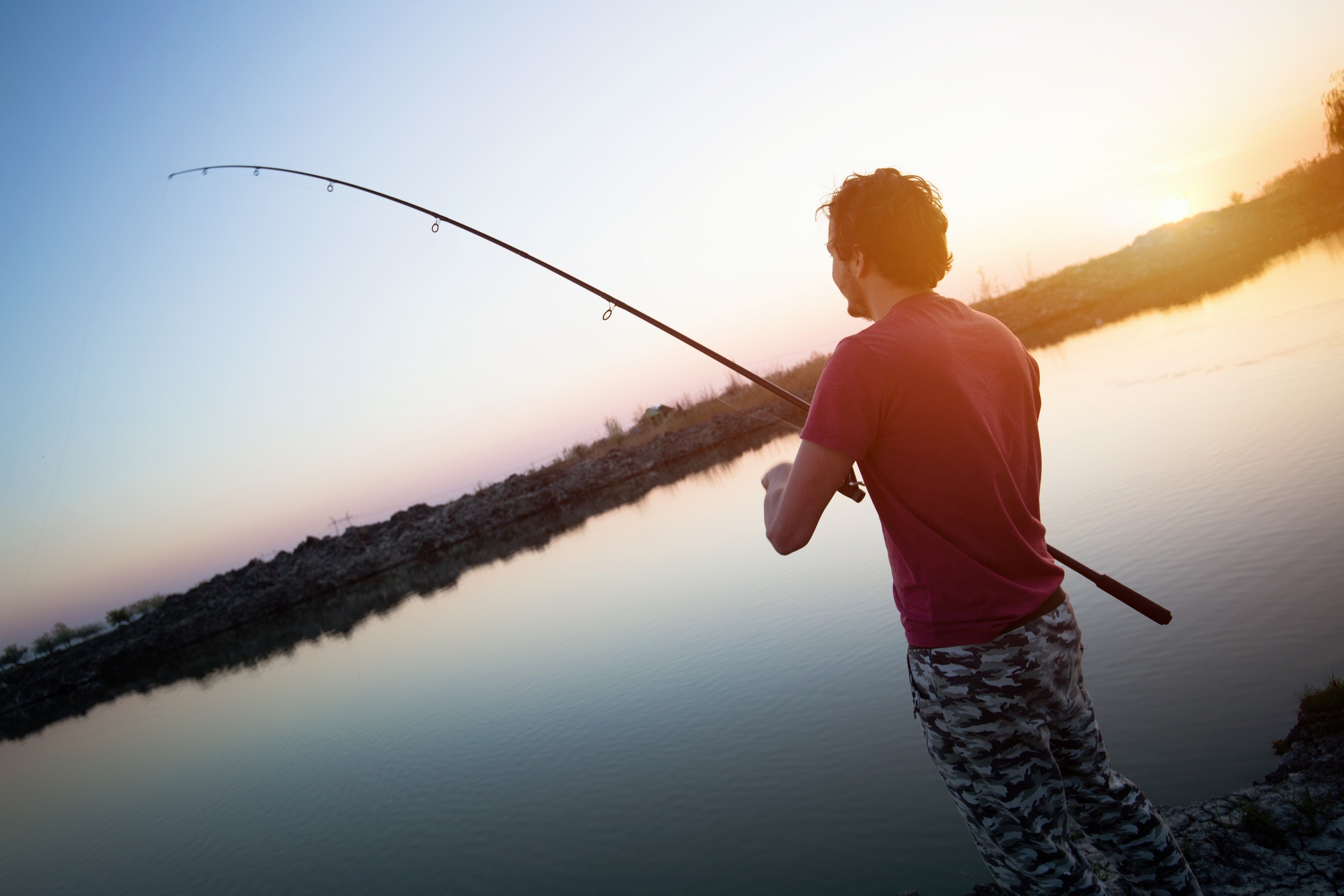
Ask ten experienced muskie anglers what makes a great muskie rod and you may get ten slightly different answers. That is because muskie fishing covers a surprisingly wide range of techniques.
One angler may spend the day burning bucktails over weeds. Another may cast large rubber baits along deep structure. Someone else may work jerkbaits, throw topwater lures, or troll large crankbaits. Each technique puts different demands on a fishing rod.
There is no single specification that automatically creates the perfect muskie rod.
Instead, a great muskie rod combines the correct power, action, length, balance, components, and fit for the angler and technique.
That distinction matters.
Muskies are among the largest freshwater predators anglers pursue in Minnesota and throughout the Upper Midwest. The Minnesota Department of Natural Resources notes that muskie anglers commonly cast large artificial lures and recommends stout rods in approximately the seven- to nine-foot range.
But strength is only the beginning.
A rod must also help an angler cast efficiently, control a lure, execute a solid hookset, manage a powerful fish, and maintain control during one of the most important moments in muskie fishing: the boatside encounter.
For anglers making hundreds of casts during a day on the water, comfort and balance become just as important.
Here is what to consider when evaluating a muskie fishing rod.
Power describes how much force is required to bend a fishing rod.
Because muskie anglers frequently use large lures, heavy line, and substantial terminal tackle, muskie rods generally require considerably more backbone than rods designed for species such as walleye, crappie, or bass.
Heavy and extra-heavy powers are common in muskie fishing, but the correct choice depends on what the rod will actually be asked to do.
A rod designed for relatively modest bucktails does not necessarily need the same characteristics as a rod intended to launch very large soft plastics.
The lure matters.
So does the hook configuration.
A great muskie rod needs enough power to:
More power, however, is not automatically better.
An unnecessarily heavy rod can add weight and fatigue while making certain presentations less enjoyable to fish. The objective should be appropriate power, rather than simply selecting the stiffest rod available.
This is one reason muskie rod selection should begin with technique and lure choice instead of a specification printed on a label.
Power and action are sometimes treated as interchangeable terms, but they describe different characteristics.
Power relates to the force required to bend the rod. Action describes where the rod begins to flex under load.
A faster-action rod generally flexes closer to the tip, while a more moderate action allows the blank to load farther down.
Why does that matter for muskie fishing?
Because action influences casting, lure control, hooksets, and the way a rod responds when a fish surges.
Some techniques benefit from a responsive tip and substantial backbone. Others can benefit from a rod that loads more progressively.
The ideal action therefore depends on how the rod will be used.
When evaluating a muskie fishing rod, ask:
Matching rod action to technique creates a more useful fishing tool than choosing a rod based solely on its maximum lure rating.
Modern muskie rods are often long for good reasons.
Additional rod length can help anglers make long casts, move more line during a hookset, direct large lures, and perform wide boatside turns or figure-eight maneuvers.
That last point is especially important.
Muskies are famous for following lures all the way to the boat. The Minnesota DNR specifically advises anglers to watch for following fish and use a figure-eight presentation at boatside. A longer rod can give the angler additional reach for broad, controlled turns.
Yet the longest rod available is not automatically the best muskie rod for every person.
Rod length affects:
An angler’s height, arm length, casting motion, boat configuration, and preferred techniques can all influence the ideal rod length.
A muskie rod should work with the angler rather than force the angler to adapt to it.
Muskie lures can be substantial.
Bucktails, jerkbaits, crankbaits, topwater baits, and large soft plastics create very different loads during both casting and retrieval.
A rod that feels excellent with one lure can feel completely wrong with another.
That is why lure weight ratings deserve serious attention.
The rod needs to load efficiently during the cast without being overloaded. It also needs enough strength to manage the lure throughout the retrieve.
When a rod and lure are poorly matched, casting can become inefficient and uncomfortable. Over hundreds of casts, even small inefficiencies become noticeable.
A properly matched muskie rod should make the lure feel manageable rather than burdensome.
For anglers who regularly fish several dramatically different lure categories, multiple technique-specific rods may make more sense than expecting one rod to perform every job equally well.
Anglers naturally notice how much a fishing rod weighs.
But balance can be just as important as total weight.
A poorly balanced rod may constantly pull forward at the tip. The angler compensates by applying additional pressure through the hand, wrist, forearm, and shoulder.
Repeat that motion hundreds of times and the difference becomes significant.
A properly balanced rod and reel combination can feel more natural in the hand even when it is not technically the lightest setup available.
Balance is influenced by several components, including:
LakeLady Custom Fishing Rods addresses balance as part of the complete rod rather than looking at individual components in isolation. A custom rod can be designed around the reel an angler intends to use, helping the finished setup work as a unified system.
For muskie anglers who spend long days casting, that distinction can be especially valuable.
The handle is one of the most personal parts of any fishing rod.
It is also easy to overlook.
A muskie rod’s rear grip can provide leverage during casting and help stabilize the rod while retrieving high-resistance lures or fighting a fish. But a grip that is too long, too short, too large, or too small can interfere with an angler’s natural mechanics.
A well-designed muskie rod handle should complement the angler’s body and fishing style.
Consider:
LakeLady’s custom rod-building process includes hand and arm measurements so rod dimensions can be tailored to the individual angler.
That kind of fit goes beyond appearance.
When a fishing rod fits naturally, the angler does not have to continually adjust to equipment designed around an “average” user.
Rod guides have a straightforward job: manage fishing line as it travels along the blank.
Doing that job well requires thoughtful component selection and placement.
Muskie equipment routinely deals with heavy braided line, aggressive casting, large lures, and substantial loads. Guides therefore need to be durable and correctly positioned.
Guide placement can also influence how effectively the blank performs under load.
This is where custom rod construction can differ substantially from simply assembling a collection of premium components. High-quality parts matter, but those parts also need to work together correctly.
Guide type, spacing, alignment, and wrapping are all part of the finished system.
LakeLady also emphasizes building rods in relation to the blank’s spine. Proper blank orientation is one of the construction details considered in producing a rod designed to load and perform consistently.
For an angler, these details may be nearly invisible.
Their effect on the finished rod is not.
Every fishing rod starts with the blank.
The blank establishes much of the rod’s fundamental character, including its power, action, weight, recovery, and overall feel.
A premium blank alone does not guarantee a great finished rod. It still needs to be selected correctly and paired with appropriate components.
For muskie fishing, durability and strength are obvious priorities, but a rod should not simply feel like a rigid pole.
The blank should provide the characteristics required for the intended presentation while remaining manageable enough for repeated use.
LakeLady’s process starts with material and blank selection based on the angler’s target species, fishing method, and preferences. For freshwater builds, LakeLady lists Batson RainShadow among its blank sources.
Selecting a blank this way is fundamentally different from starting with a finished factory rod and trying to determine whether it happens to fit the intended technique.
Muskie fishing is demanding on equipment.
Large lures place significant loads on a rod during casting. High-resistance presentations create continuous stress during retrieves. Hooksets can be forceful, and a large muskie can produce sudden changes in direction near the boat.
A great muskie rod therefore needs to be constructed for repeated use, not merely impressive specifications.
Durability involves the entire build:
Quality construction becomes especially important because failure during muskie fishing can occur under substantial load.
Durability does not mean making every component unnecessarily heavy. It means selecting and assembling components appropriately for their intended purpose.
Specifications provide useful starting points.
They do not tell the entire story.
Two anglers can target the same species on the same lake and need different rods.
One may spend most of the season casting bucktails across shallow weed beds. Another may concentrate on large rubber baits along deep breaks. A third may spend significant time trolling.
Their rods should reflect those differences.
Before selecting or designing a muskie rod, consider these questions:
What techniques do you use most?
Start with the way you actually fish rather than the techniques you might occasionally try.
What lure weights do you throw most often?
The answer can dramatically narrow the appropriate blank, power, and action.
How long are your fishing sessions?
Comfort and balance become increasingly important during extended casting sessions.
What reel will be paired with the rod?
A rod and reel should function as a balanced combination.
How do you prefer a rod to feel?
Some anglers prefer a crisp, responsive feel. Others prefer a rod that loads more progressively.
Are you looking for versatility or specialization?
A versatile muskie rod can cover multiple presentations, while a specialized rod can be optimized around a narrower technique.
These questions are more useful than simply asking, “What is the best muskie rod?”
The better question is, “What is the best muskie rod for this angler and this application?”
Custom fishing rods allow specifications to be selected around an individual instead of requiring the individual to accommodate standardized equipment.
At LakeLady Custom Fishing Rods, that process begins with a conversation about target fish, fishing method, rod preferences, and the angler’s physical measurements.
Length, action, power, grip dimensions, materials, and balance can then be considered as parts of the same design.
For a demanding species such as muskie, this approach makes practical sense.
A custom muskie rod is not simply a factory rod with decorative thread colors. True customization addresses the functional characteristics of the rod first.
Appearance can still make the finished rod personal, but performance begins with fit and purpose.
Choosing good muskie equipment is also about controlling and releasing fish efficiently.
Muskies are a highly valued sport fish, and catch-and-release plays an important role in modern muskie fishing. Muskies, Inc. maintains extensive catch-and-release records, while the Minnesota DNR provides anglers with current information about muskie regulations, seasons, identification, and fishing practices.
The DNR recommends having appropriate fish-handling equipment available, including a large net and tools for hook removal. It also advises keeping a muskie in the water while removing hooks when possible.
A rod with sufficient power can be part of an efficient overall muskie setup because the goal is not to unnecessarily prolong the fight.
Rod, reel, line, leader, net, release tools, and angler preparation all work together.
Before fishing, anglers should also check current regulations for the specific water they intend to fish, since seasons and special regulations can vary.
A great muskie rod is not defined by one specification.
It is the result of multiple characteristics working together.
The rod needs enough power for the intended lures and fish. Its action should complement the fishing technique. Length should provide casting performance, lure control, and effective boatside maneuverability without becoming cumbersome.
The handle should fit the angler. The rod and reel should balance naturally. Guides and other components should withstand demanding use. Most importantly, the finished rod should be designed around how the angler actually fishes.
That is what separates a rod that merely meets a list of specifications from one that feels right on the water.
For muskie anglers, where a day can involve hundreds of casts before a fish appears, small details become important.
The right muskie rod cannot guarantee the fish of a lifetime.
It can provide the control, comfort, durability, and confidence to be ready when that fish finally appears.
Questions about muskie rod specifications, custom fishing rod construction, rod fit, or choosing components can be discussed directly with LakeLady Custom Fishing Rods.
LakeLady Custom Fishing Rods
29297 Piney Way
Breezy Point, MN 56472
Phone: (218) 251-2626
Email: rodbuilder@lakeladyrods.com